Zone-specific methods
Production cells, warehouse aisles, docks, and support areas do not accumulate debris in the same way. The scope sets a practical approach for each zone instead of treating the whole building alike.
Serving Colorado Springs, Colorado & surrounding areas
Mon–Fri 8am–6pm · Sat 9am–2pm
Industrial cleaning · Colorado Springs
Keep industrial work areas ready for daily operations with a cleaning scope built around production activity, forklift routes, equipment access, and the conditions at your facility.

Recurring cleaning that follows the dock, the aisles, and the production areas your operation runs on.
Industrial facility planning
Industrial facilities take on airborne dust, pallet debris, tire marks, packaging residue, and material carried through active work zones. A useful cleaning scope separates those conditions from ordinary office work and accounts for the way the facility operates.
Warehouses, distribution centers, and light-manufacturing facilities have different pressure points: loading docks, staging areas, rack aisles, machine-adjacent spaces, and concrete or coated floors. Each requires access planning that respects equipment, inventory, and plant traffic.
Industrial cleaning can be planned around shifts, production windows, scheduled shutdowns, and site access rules. The written scope should make clear which areas are included, how access is coordinated, and when equipment-based floor work is practical.
Service standards
Production cells, warehouse aisles, docks, and support areas do not accumulate debris in the same way. The scope sets a practical approach for each zone instead of treating the whole building alike.
Dock aprons, staging areas, and packing stations generate most of what ends up spread through the building. Regular attention there keeps debris from migrating into production and office space.
Hallways, reception paths, and primary walkways tend to show wear sooner than low-use areas. A floor plan calls out those lanes and gives them a defined frequency.
Machine scrubbing and other focused work are planned around surface condition, access, and traffic, rather than added as a generic extra.
Wind, grit, moisture, and winter de-icer residue can change what entrances and walkways need. The plan can increase attention where the season shows up first.
A clear record of floor types, trouble spots, and service intervals helps the program stay useful as building use and traffic patterns change.
Operations-led scheduling
Industrial cleaning works when it follows the operating day. Production cells, dock approaches, warehouse aisles, and office support areas each run on different rhythms, so a single blanket frequency rarely suits all of them.
We start where debris is generated and where it travels: machine-adjacent floor, staging and packing zones, dock aprons, and the aisles that carry forklift and pallet-jack traffic between them.
The aim is a routine your plant staff can plan around: recurring work in agreed windows, periodic attention where dust and residue accumulate, and equipment-based floor work scheduled when the area can be released.
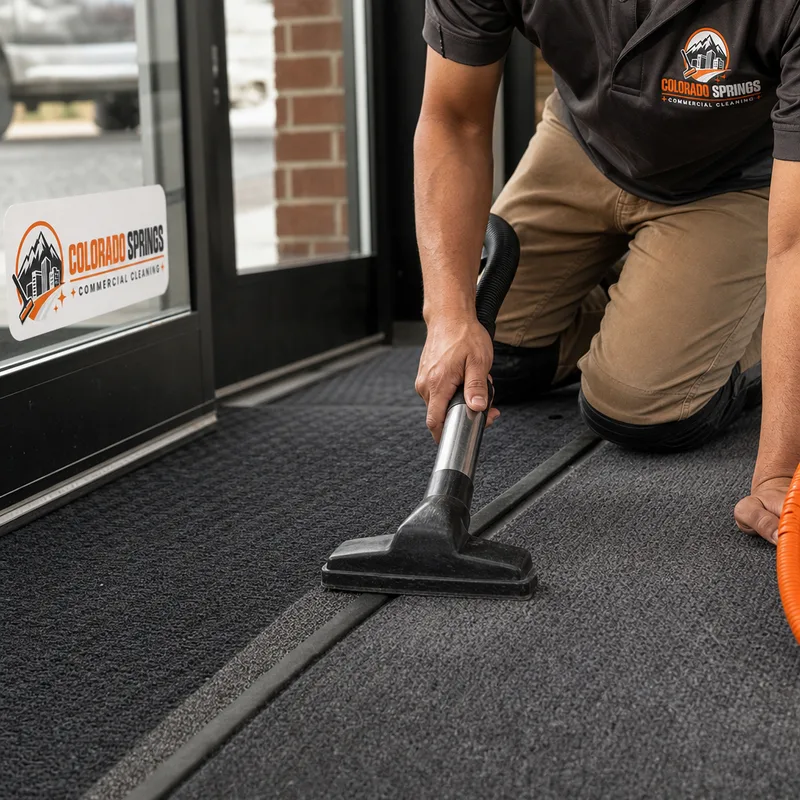
Where industrial cleaning focuses
An industrial scope has to name its zones, because access and safety rules differ across a single building.
Production areas. Machine-adjacent floor, guarding, and work surfaces need agreed clearances and a defined boundary for what crews may and may not touch.
Docks and staging. Docks and staging carry the heaviest soil load: dust, packaging debris, pallet splinters, and tracked-in moisture or de-icer through winter.
Warehouse aisles. Forklift lanes and racking runs are defined by use rather than room name, and often need clearing before anything else in the building.
High-level dust. Racking, beams, and elevated surfaces are scoped with stated elevations and access requirements, because reach and safety limits decide what is practical.
Documented access. Recording restricted zones, lockout expectations, escort rules, and shift contacts keeps recurring work predictable for both crews and plant staff.
A coordinated start
We walk the facility with someone who knows its operations: work zones, debris sources, dock activity, restricted areas, and the hours each space can realistically be accessed.
The written scope separates production, warehouse, dock, and support areas, and states plainly what crews handle and what remains with plant staff.
Work is scheduled around shift changes, lower-activity periods, or planned downtime, with the aisles and routes that must stay clear identified in advance.
As production volume, layout, or storage patterns change, the scope is revisited so effort stays on the areas that actually need it.
Budget factors
Industrial pricing depends on the floor area involved, the number and type of work zones, the debris load, access and safety requirements, the service window available, and how often the work recurs. High-level dust and equipment-based floor work are scoped separately.
A walkthrough settles the scope before pricing is confirmed. For an operating facility that matters more than square footage, because access rules and shift timing shape what can be done in a visit.
Clear answers before scheduling
A scope can include warehouse aisles, loading docks, production and equipment areas, break rooms, restrooms, and office support spaces. A walkthrough identifies the work zones, surface conditions, access restrictions, and service windows that apply.
Yes. Service can be planned for shift changes, lower-activity periods, planned shutdowns, or other available windows. Timing depends on access rules, the areas involved, and coordination with plant staff.
Forklift lanes and dock approaches need to remain clear for active operations. The service plan identifies when those routes can be accessed and coordinates the work around deliveries, staging, and vehicle movement.
High-level dust and accessible racking can be evaluated during the walkthrough. The scope should state the elevations, access requirements, and operational limits before any work is scheduled.
Concrete and coated floors can be included when the scope accounts for their condition, the debris present, traffic patterns, and the equipment that can safely be used in each area.
The plan is coordinated with plant staff so machine-adjacent work, restricted zones, and required clearances are understood before service begins. Work is limited to the agreed areas and access conditions.
Start with the areas that keep production moving
Tell us about your work zones, shift pattern, and access requirements. Colorado Springs Commercial Cleaning can walk the facility and outline a practical scope for recurring work, dock and aisle attention, and coordination with plant staff.
Request a quote
Send a few details and we will follow up to arrange a walkthrough.